Jakob Schmitt · 21 October 2026
Patient Pathway Optimization in Dedicated Outpatient Centers Using Demographic Trend Analysis
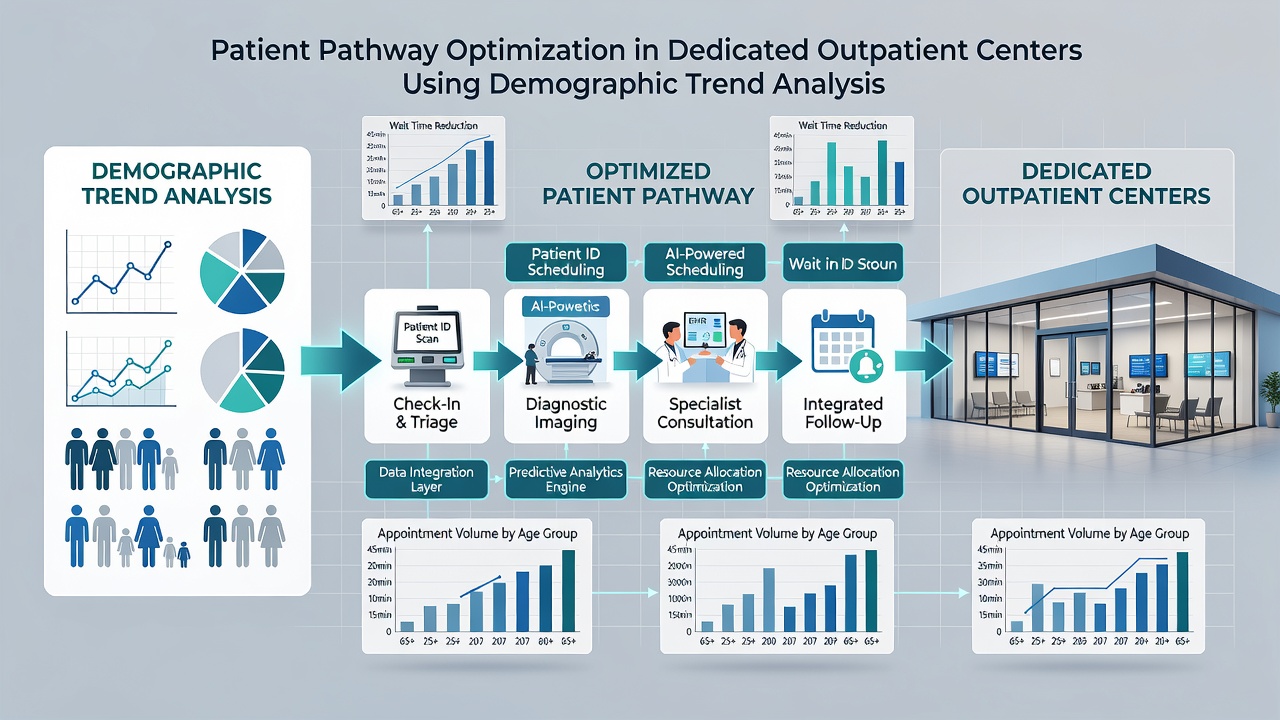
Demographic shifts continue to reshape healthcare delivery across dedicated outpatient centers, where administrators apply trend analysis to refine patient pathways from initial contact through follow-up care. Population data reveals steady growth in older age groups alongside urban migration patterns that concentrate demand in specific regions, prompting centers to adjust scheduling, resource allocation, and service offerings accordingly. Researchers track variables such as age distribution, income levels, and chronic disease prevalence to identify bottlenecks in appointment access or diagnostic sequencing, while software tools integrate census figures with electronic health records to forecast daily patient volumes. Studies from multiple regions document how these adjustments reduce wait times and improve throughput without expanding physical infrastructure. For instance, centers serving rapidly aging communities prioritize streamlined intake processes for mobility-limited patients, whereas facilities in growing suburban areas expand pediatric and preventive services based on birth rate projections. Data shows that incorporating real-time demographic overlays allows for dynamic staffing models, where peak periods tied to seasonal population movements receive targeted support.Mapping Demographic Variables to Pathway Design
Analysts break down demographic inputs into actionable segments that directly influence pathway configuration. Age cohorts drive decisions on procedure mix, since higher concentrations of patients over sixty correlate with increased demand for joint assessments and cardiac monitoring, whereas younger demographics elevate needs for mental health and reproductive services. Income and employment data further refine these models by highlighting barriers such as transportation access or insurance coverage gaps that extend cycle times from referral to consultation. Centers integrate these layers through geographic information systems that overlay zip-code level statistics onto internal utilization logs, revealing clusters where certain pathways experience repeated delays. One analysis of Midwest facilities found that neighborhoods with elevated single-parent households required extended evening slots to accommodate work schedules, leading to measurable drops in no-show rates after implementation. Such mapping also accounts for language and cultural factors that affect patient navigation, prompting the addition of multilingual navigation staff at key touchpoints.Integration of Trend Analysis Tools in Daily Operations
Software platforms pull live feeds from national statistical agencies to update pathway simulations on a rolling basis. European data sources, including those maintained by Eurostat, supply cross-border migration trends that outpatient networks in border regions use to anticipate language and documentation needs. Centers combine these external feeds with internal metrics on procedure durations and staff productivity to run scenario tests, such as projecting the impact of a ten percent rise in diabetes prevalence on endocrinology slots over the next quarter. Staff training incorporates these outputs so that schedulers recognize early indicators of pathway strain and trigger preemptive adjustments. In October 2026, several North American networks plan to roll out enhanced dashboards that merge census updates with claims data, allowing real-time rebalancing of specialist availability across multiple sites. This approach builds on earlier pilots where centers reduced average pathway length by reallocating diagnostic imaging resources toward high-growth zip codes identified through trend modeling.